
Ten Years of Iterating Toward What Works
Ten years, four business models, and why we repositioned around independent verification rather than adding another product line.
Sustainability Reporting: When Measurement Defines Reality
Sustainability moved into the finance function. The risk is that it comes to mean whatever is measurable rather than whatever is material.

The Trust Tax: Paying for Scaffolding
Verification spending is the installation cost of pricing externalised damage. What would make it cheaper, and who controls the data layer underneath.
Who can afford to comply with EU sustainability rules?
EU sustainability rules apply flat compliance costs to suppliers of very unequal capacity. The distributional effect, and three things buyers can do about it.
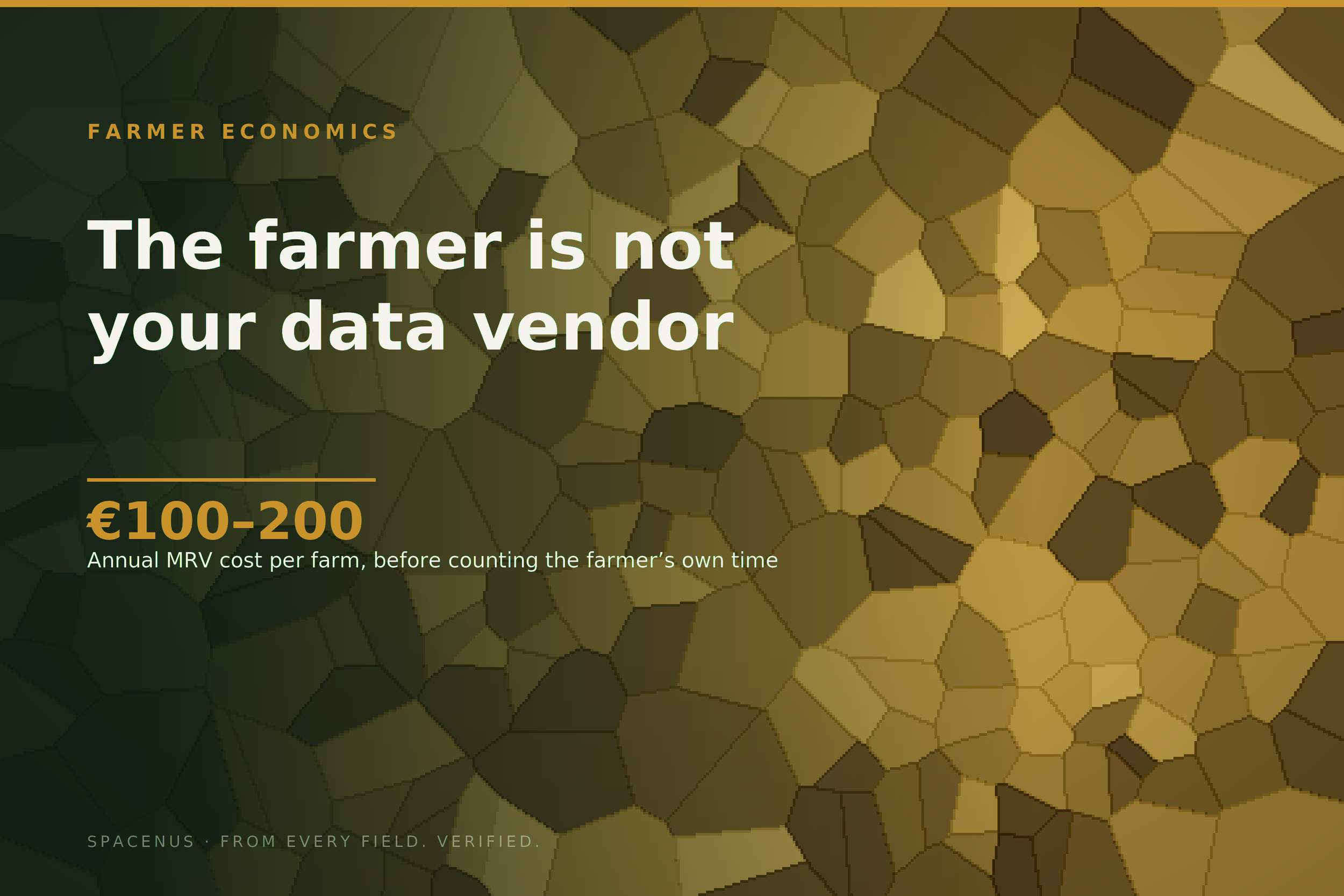
The Farmer Is Not Your Data Vendor
Farmers generate the primary data behind corporate disclosure, carry the verification cost, and capture a minority of the value. Three counter-arguments.

One field, five audits: why harmonisation keeps failing
Harmonisation fails on purpose, not on format. A two-layer architecture that lets one farm event mean different things to five institutions.
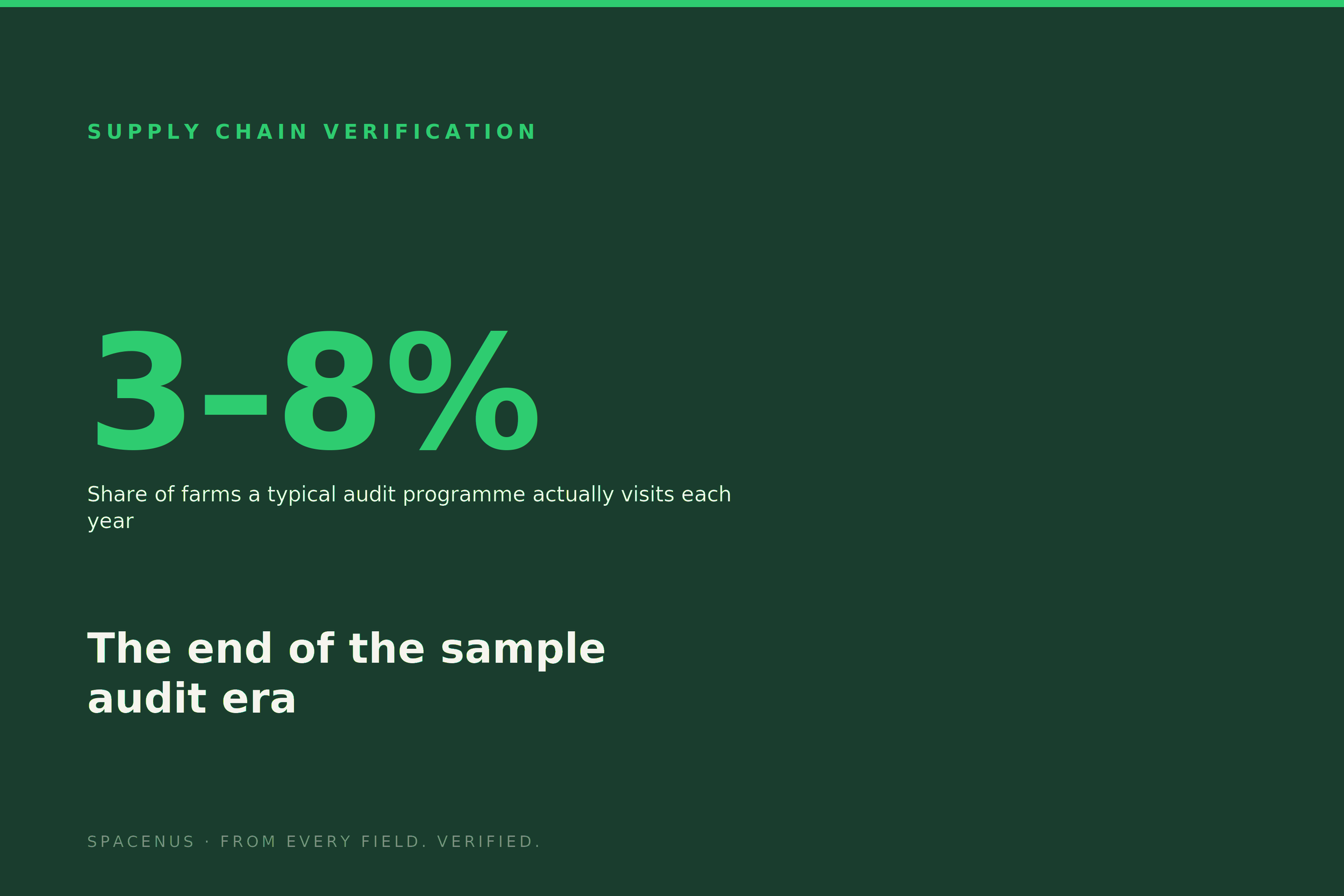
Audit coverage and continuous monitoring: closing the gap
Audit programmes visit a sample of farms; claims cover all of them. What continuous monitoring closes, and the three things it genuinely cannot do.

Four checks before you invest in a soil carbon project
CSRD scope narrowed in 2026, but LSR arrives in January 2027. What separates agricultural Scope 3 data an assurer accepts from data they cannot test.

What makes agricultural GHG accounting audit-ready?
The reporting obligation moved in 2026 and most agricultural Scope 3 guidance has not caught up. This piece sets out what applies after CSRD Omnibus I, what GHG Protocol LSR requires from January 2027, and what separates data an assurance provider will accept from data they will not.

The cloud cover problem, and what SAR-optical fusion can and cannot fix
Optical satellites go blind under cloud. How Sentinel-1 radar fusion restores a continuous NDVI series — and why fused values are estimates, not measurements.
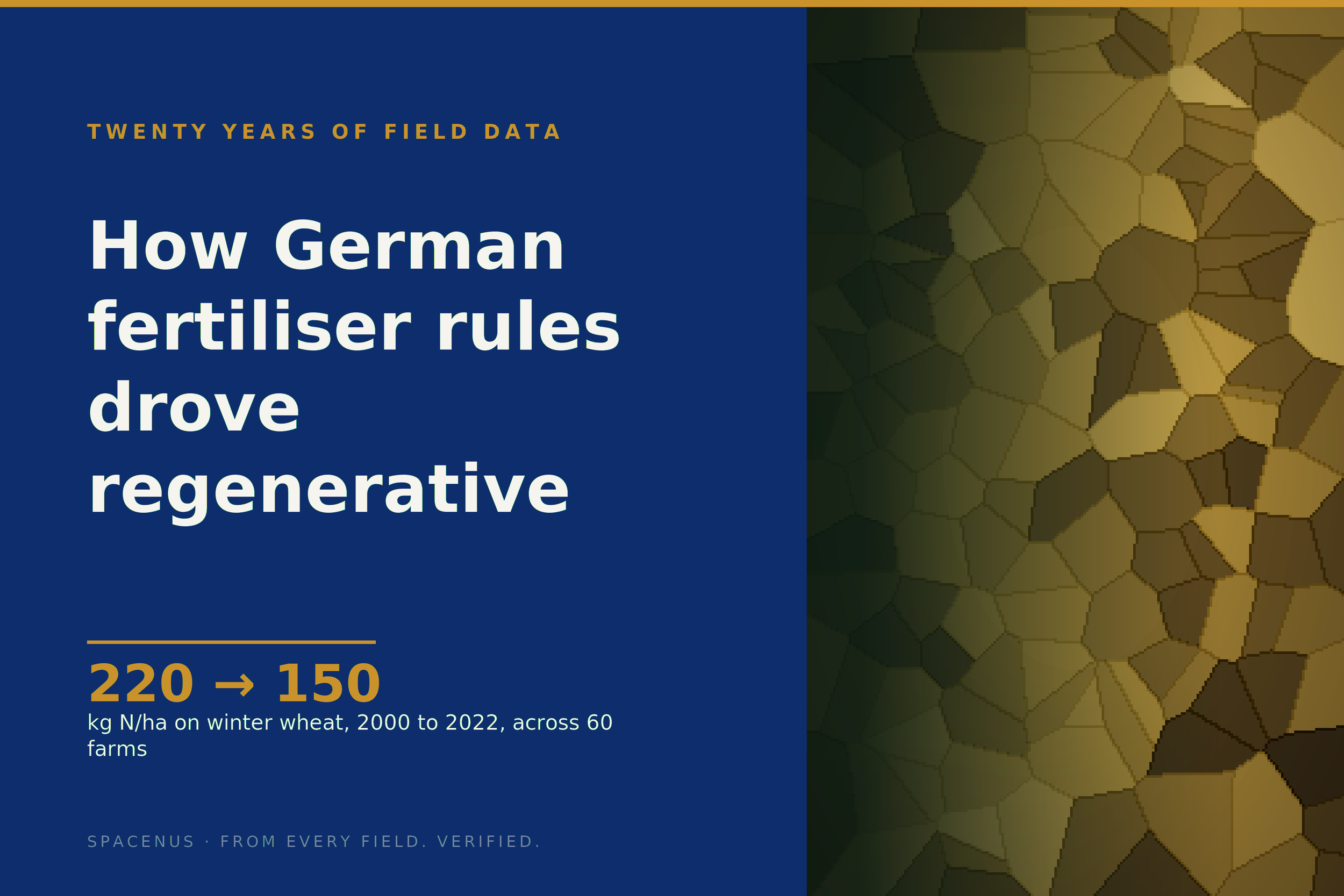
How the Düngeverordnung changed nitrogen decisions at field level
German farmers expected the Düngeverordnung to cost yield. Two decades of nitrogen data suggest the regulation rewarded regenerative practice instead.

Soil carbon and water: correcting a figure the sector repeats
A 0.1% soil carbon gain does not hold 200,000 litres per hectare. The soil-mass arithmetic, the measured figure, and what soil carbon really buffers.
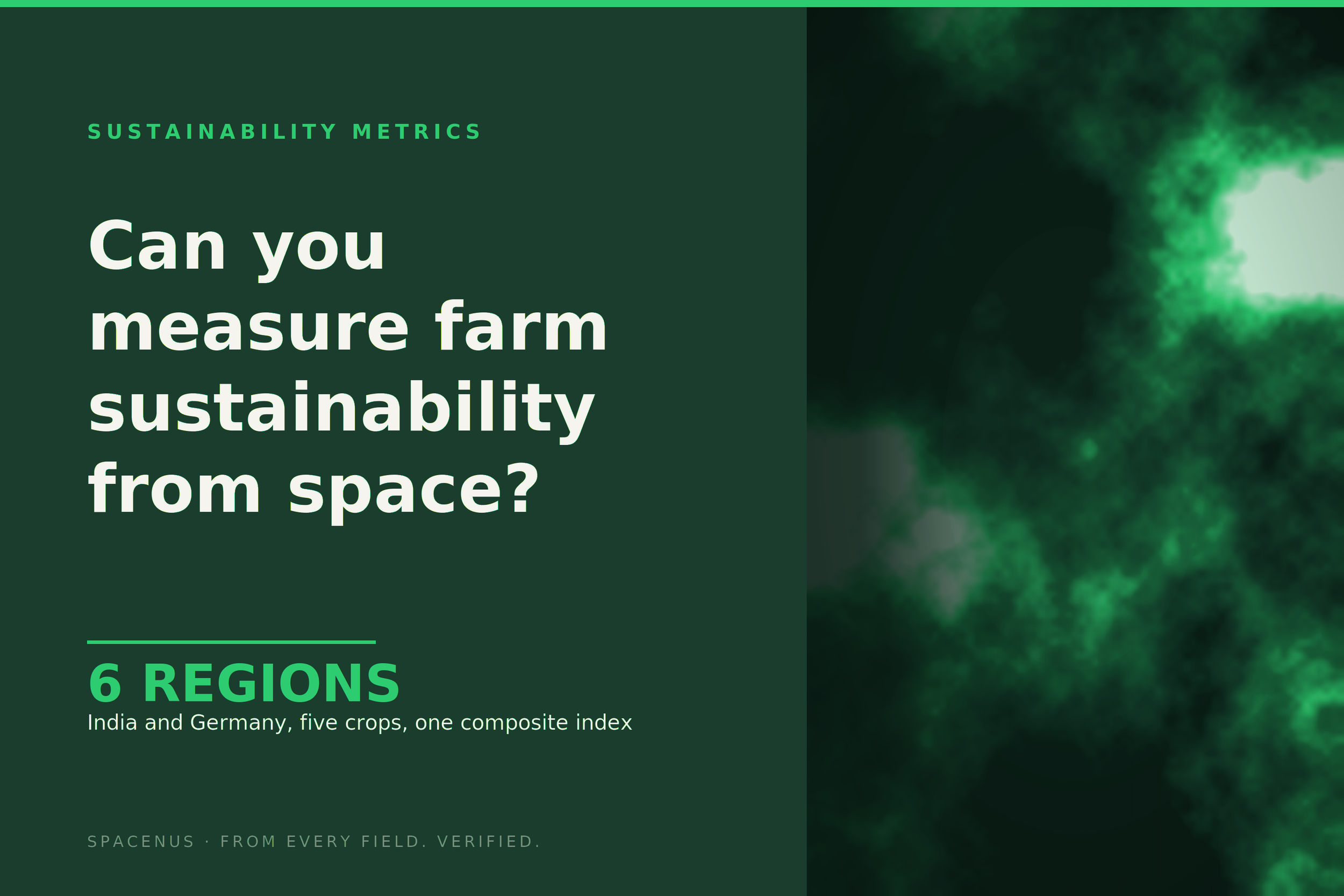
Measuring nitrogen surplus from satellite: what German field data shows
Sustainability resists one number. A narrow, testable satellite proxy for German nitrogen surplus, what it showed, and where it fell short.
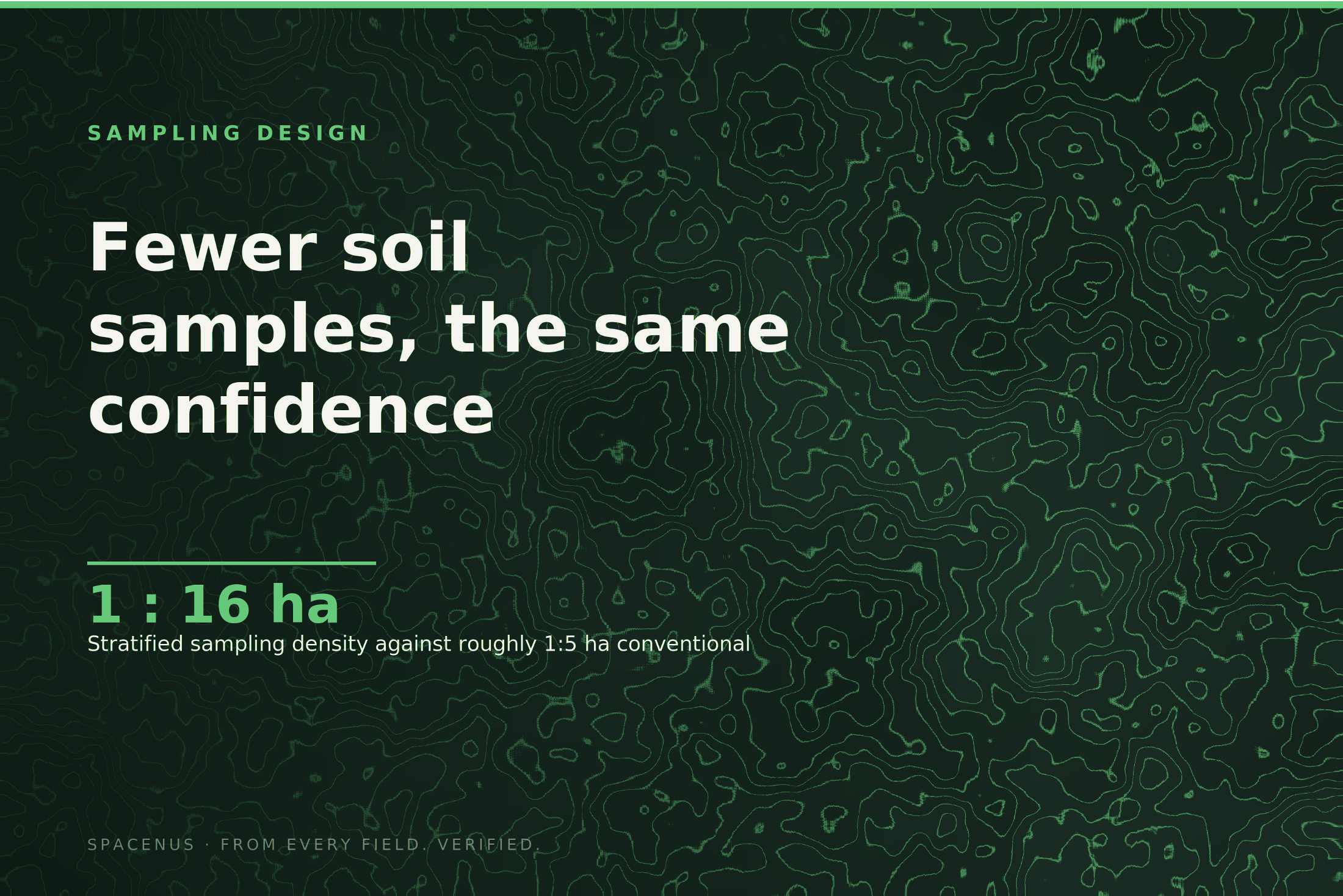
Soil sampling design: how many samples do you actually need?
Sample count follows from your confidence level and minimum detectable difference - not from a fixed ratio. What stratification changes, and what it cannot.
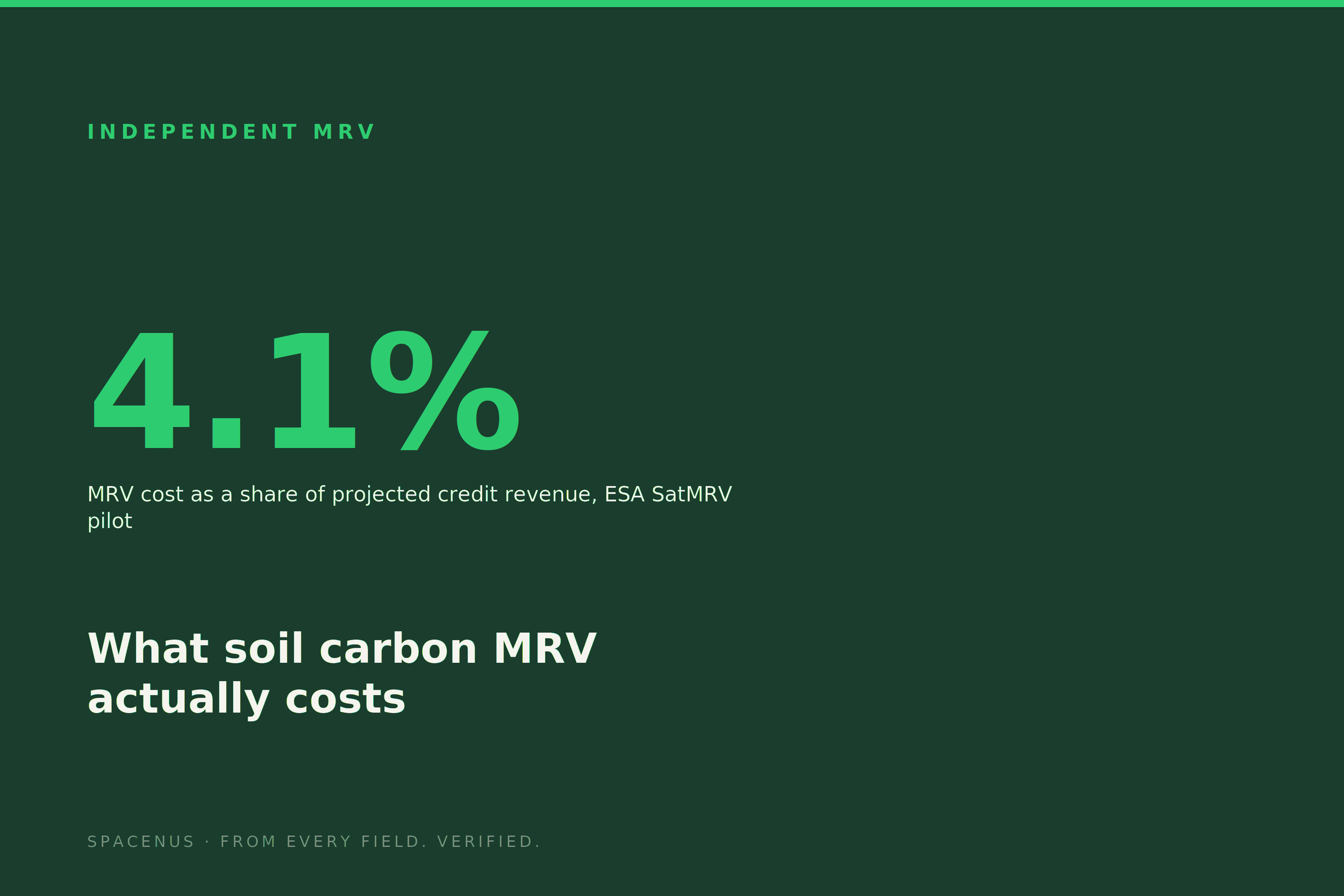
What soil carbon MRV actually costs - and what cannot get cheaper
Verification usually takes 25–50% of a soil carbon project's budget. Across 8,845 ha of ESA pilots, stratified sampling brought it to 4.1% of credit revenue.
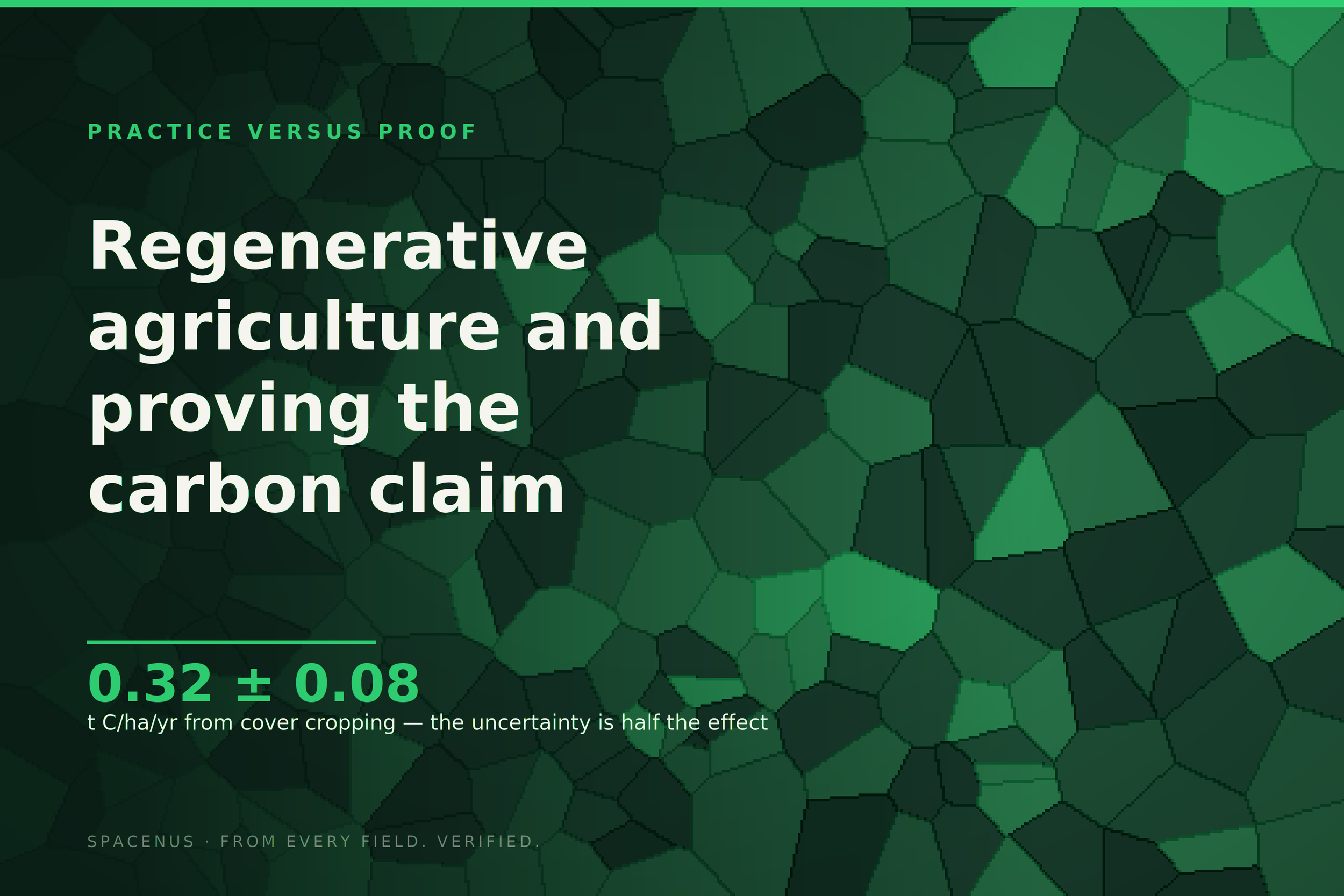
Where soil carbon credit revenue actually comes from
Practice is spreading faster than proof. Sequestration uncertainty bands, reversibility, and why permanence provisions matter more than a single measurement.
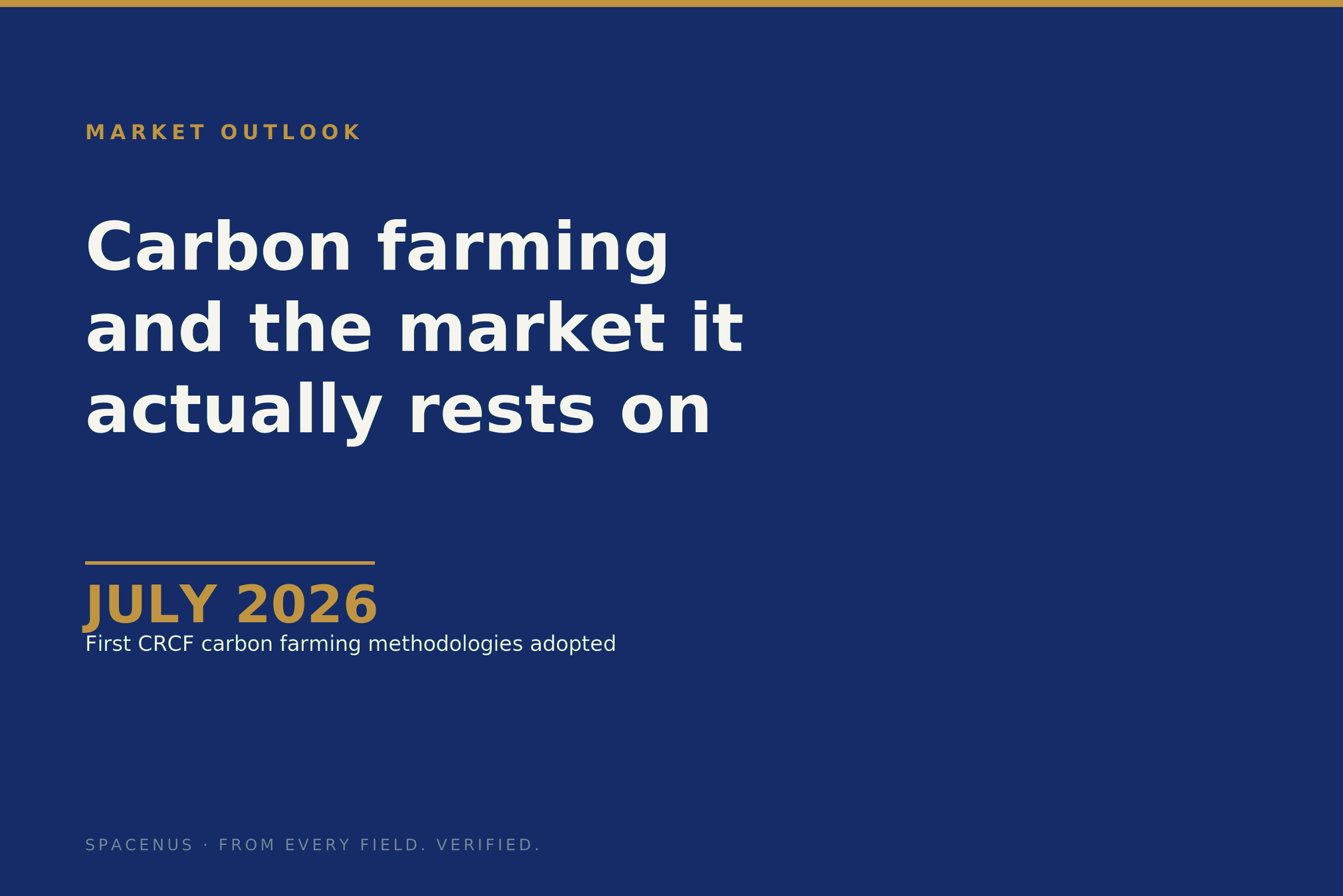
How big is the carbon farming market? Which numbers are real
Trillion-dollar carbon figures describe allowance trading, not the voluntary market where soil carbon sits. What the July 2026 CRCF methodologies changed.
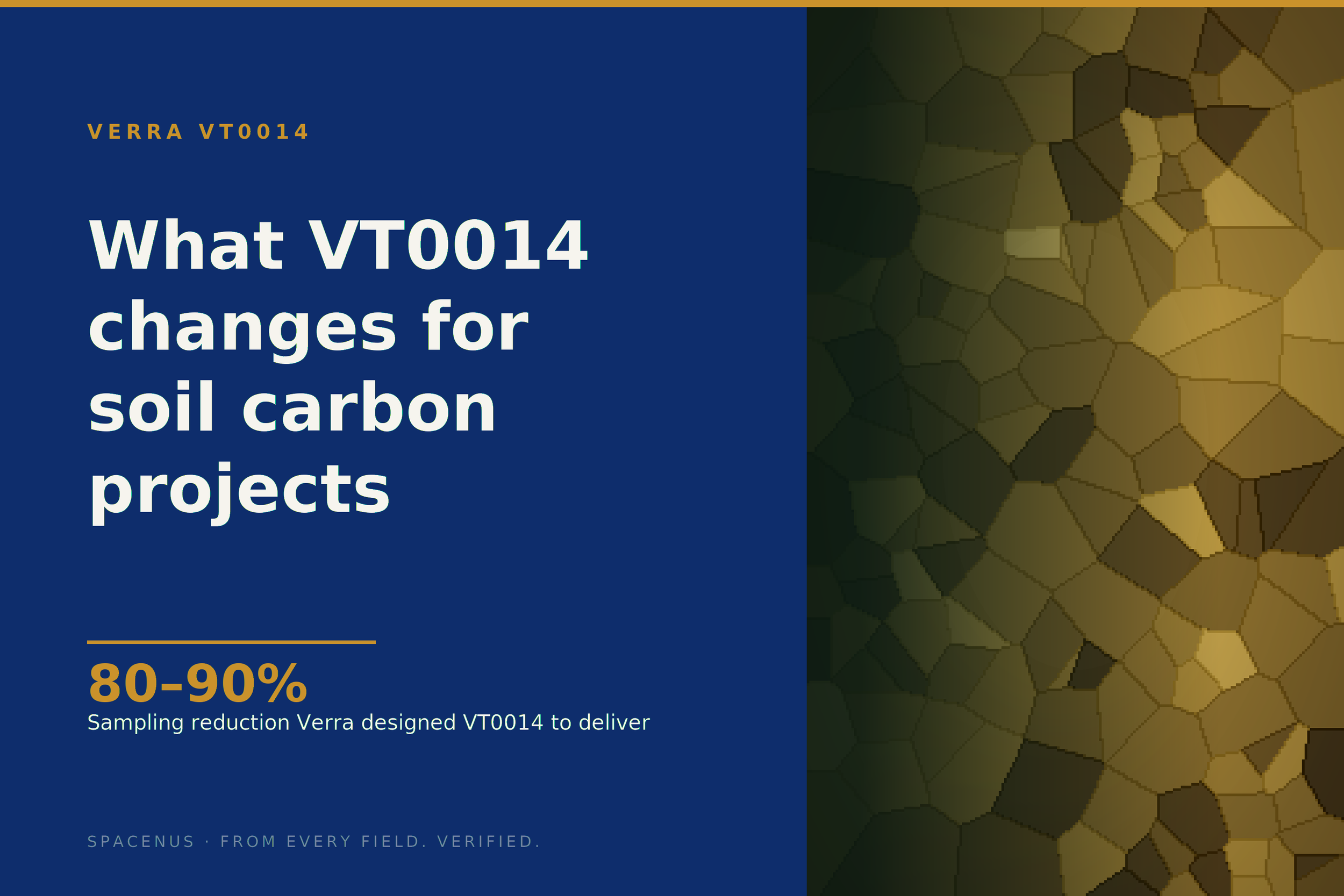
What Verra's VT0014 actually permits for digital soil mapping
VT0014 changes the soil core's job from measuring an average to validating a model. What that does to cost, and the three risks that move with it.
Why colour choice changes what a field map tells you
A field map is a decision instrument, not a picture. Why perceptually ordered colour scales change which zones an agronomist actually acts on.